
Marina Village
Typology : Mixed Use
Location: Georgetown, South Carolina.
Area: 550,252.50 m2 / 5,922,868.62 sf
Year: 2026
Status: On Going
Marina Village is a new mixed-use community located in Georgetown, South Carolina—one of the oldest cities in the United States and a town deeply rooted in maritime culture and Southern coastal heritage. The project has been conceived as a contemporary interpretation of the historic coastal town, combining residential living, neighborhood retail, public space, and preserved natural landscapes into a walkable and sustainable village environment.
The master plan introduces a low-rise mixed-use development that respects the scale, character, and architectural identity of Georgetown while creating a vibrant new destination for residents and visitors. Inspired by the vernacular architecture of the South Carolina coast, the buildings incorporate wood siding façades, shaded balconies, generous porches, and a palette of white and soft coastal blue tones that reflect the traditional language of the region while maintaining a contemporary approach to construction and sustainability.
The organization of the project begins with a carefully designed network of streets and public spaces that structure the community at a human scale. Approximately 168,000 square feet of streets and green corridors create the main circulation framework of the village, designed to prioritize slow vehicular traffic while maintaining a strong pedestrian character. These streets are complemented by more than 68,000 square feet of landscaped sidewalks and pedestrian pathways, allowing residents and visitors to comfortably walk or cycle through the development while connecting the different residential and commercial areas.
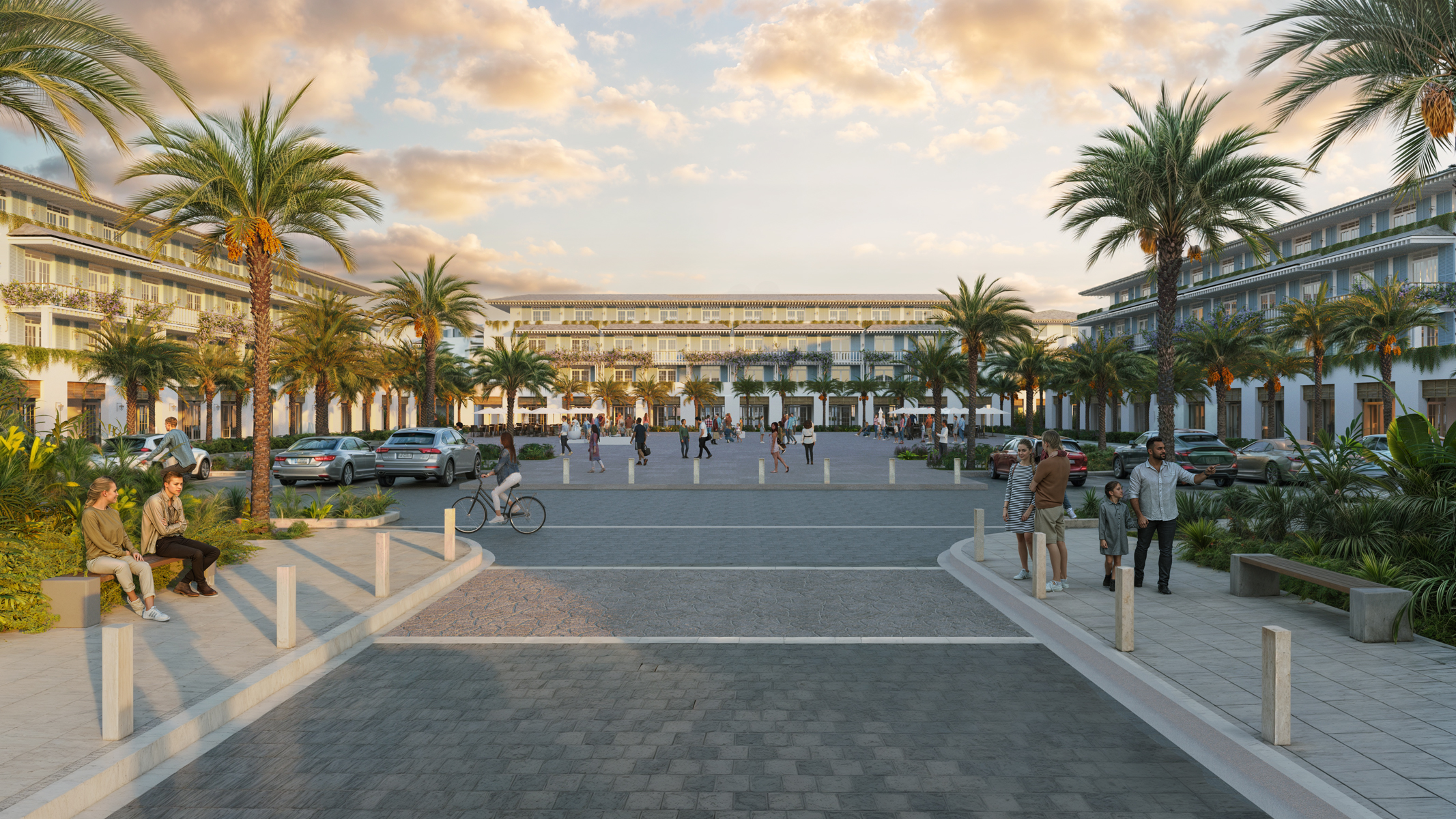
At the center of the community lies the main public plaza, conceived as the civic heart of Marina Village. Spanning more than 123,000 square feet of public plaza and landscaped open space, this central gathering place anchors the social life of the development. Restaurants, cafés, and neighborhood retail activate the edges of the plaza at ground level, while residential units above provide continuous life and natural surveillance of the public space. The plaza is designed as an open and welcoming environment for both residents and the broader Georgetown community, supporting outdoor dining, markets, cultural events, and everyday social activity.
Surrounding this central plaza are four mixed-use residential buildings, each carefully positioned to define the edges of the public square while maintaining views and permeability through the site. These buildings contain approximately 100 apartments distributed across the four structures, with ground-level retail spaces activating the public realm and creating a vibrant urban edge around the plaza. The building footprints collectively occupy more than 36,000 square feet of mixed-use development plots, while additional residential buildings on adjacent parcels contribute approximately 24,000 square feet of apartment building plots, reinforcing the residential character of the center of the community.
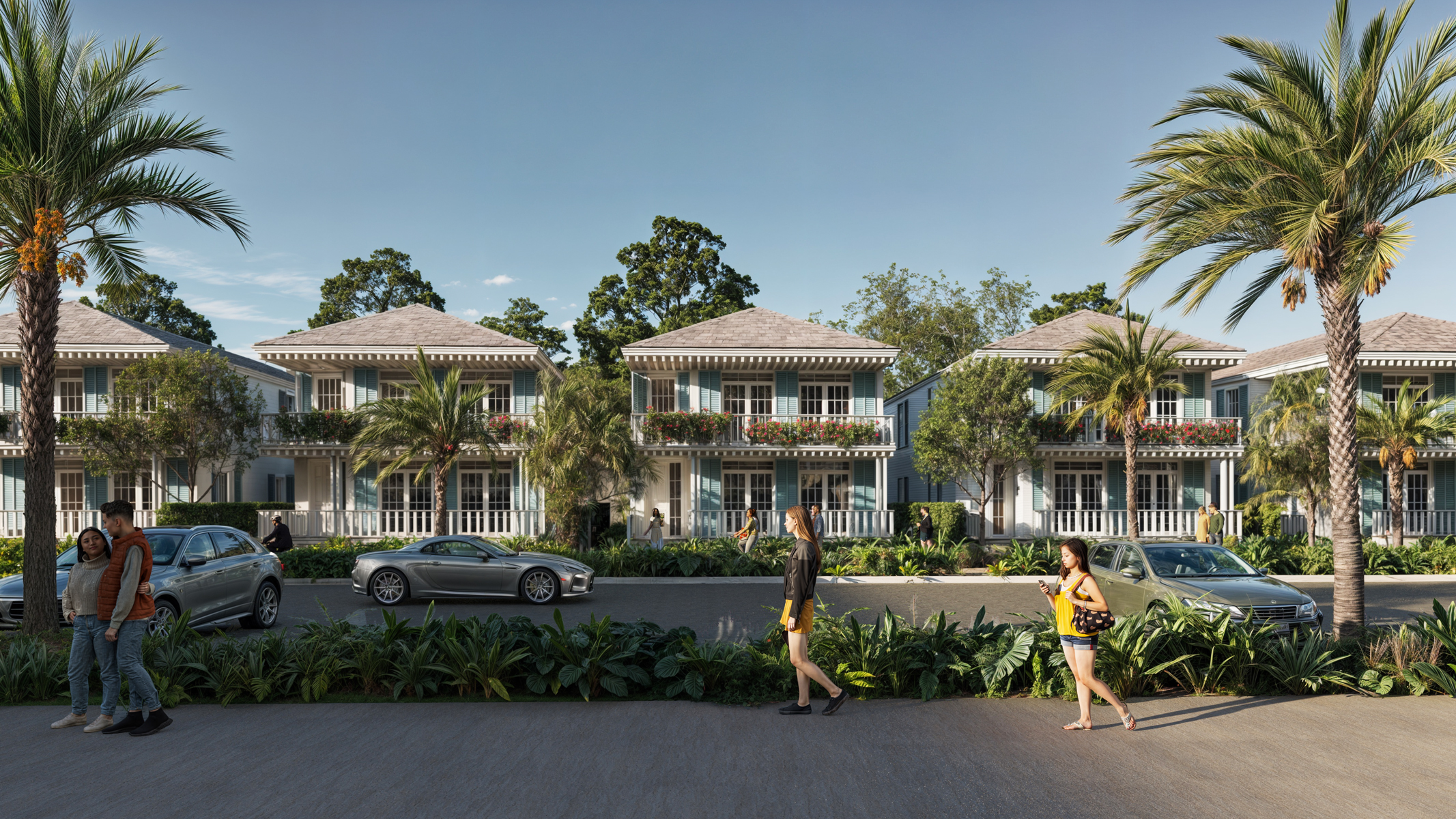
Beyond the central plaza, the master plan transitions into a quieter residential environment composed of 43 single-family houses distributed along the perimeter of the site. These homes are inspired by the traditional coastal houses found throughout South Carolina, with elevated porches, shaded balconies, and a strong relationship to the surrounding landscape. The typical residential plots occupy approximately 104,000 square feet across 35 interior lots, while eight corner plots account for an additional 24,000 square feet, creating variation in housing types and street conditions while maintaining a consistent architectural language.
The perimeter houses are carefully positioned to face both the internal streets of the village and the surrounding natural landscape, allowing the community to integrate seamlessly with the ecological context of the site. A significant portion of the land—more than 432,000 square feet—is preserved as forested wetlands, protecting the natural ecosystem while providing residents with direct access to green spaces and scenic views. These preserved areas act as both an environmental buffer and a defining landscape feature, reinforcing the identity of the development as a village immersed in nature.
Throughout the master plan, pedestrian connectivity and outdoor living are fundamental principles. Tree-lined sidewalks, pocket gardens, bicycle lanes, and landscaped streets create a comfortable microclimate that encourages walking and social interaction. The public realm is designed not simply as circulation space, but as a sequence of outdoor rooms that extend the life of the community beyond the buildings themselves.
Architecturally, Marina Village combines innovative construction methods with traditional Southern coastal design principles. Deep roof overhangs, shaded arcades, balconies with vegetation, and carefully proportioned façades create buildings that respond to the climate while reinforcing the familiar architectural character of Georgetown. The result is a development that feels both contemporary and timeless—rooted in local identity while introducing a new vision for sustainable coastal living.
By balancing residential density, public space, and environmental preservation, Marina Village proposes a new model for growth in Georgetown: a walkable, low-rise community where architecture, landscape, and public life work together to create a vibrant and enduring place.
Marina Village
Marina Village is a new mixed-use community located in Georgetown, South Carolina—one of the oldest cities in the United States and a town deeply rooted in maritime culture and Southern coastal heritage. The project has been conceived as a contemporary interpretation of the historic coastal town, combining residential living, neighborhood retail, public space, and preserved natural landscapes into a walkable and sustainable village environment.
The master plan introduces a low-rise mixed-use development that respects the scale, character, and architectural identity of Georgetown while creating a vibrant new destination for residents and visitors. Inspired by the vernacular architecture of the South Carolina coast, the buildings incorporate wood siding façades, shaded balconies, generous porches, and a palette of white and soft coastal blue tones that reflect the traditional language of the region while maintaining a contemporary approach to construction and sustainability.
The organization of the project begins with a carefully designed network of streets and public spaces that structure the community at a human scale. Approximately 168,000 square feet of streets and green corridors create the main circulation framework of the village, designed to prioritize slow vehicular traffic while maintaining a strong pedestrian character. These streets are complemented by more than 68,000 square feet of landscaped sidewalks and pedestrian pathways, allowing residents and visitors to comfortably walk or cycle through the development while connecting the different residential and commercial areas.
At the center of the community lies the main public plaza, conceived as the civic heart of Marina Village. Spanning more than 123,000 square feet of public plaza and landscaped open space, this central gathering place anchors the social life of the development. Restaurants, cafés, and neighborhood retail activate the edges of the plaza at ground level, while residential units above provide continuous life and natural surveillance of the public space. The plaza is designed as an open and welcoming environment for both residents and the broader Georgetown community, supporting outdoor dining, markets, cultural events, and everyday social activity.
Surrounding this central plaza are four mixed-use residential buildings, each carefully positioned to define the edges of the public square while maintaining views and permeability through the site. These buildings contain approximately 100 apartments distributed across the four structures, with ground-level retail spaces activating the public realm and creating a vibrant urban edge around the plaza. The building footprints collectively occupy more than 36,000 square feet of mixed-use development plots, while additional residential buildings on adjacent parcels contribute approximately 24,000 square feet of apartment building plots, reinforcing the residential character of the center of the community.
Beyond the central plaza, the master plan transitions into a quieter residential environment composed of 43 single-family houses distributed along the perimeter of the site. These homes are inspired by the traditional coastal houses found throughout South Carolina, with elevated porches, shaded balconies, and a strong relationship to the surrounding landscape. The typical residential plots occupy approximately 104,000 square feet across 35 interior lots, while eight corner plots account for an additional 24,000 square feet, creating variation in housing types and street conditions while maintaining a consistent architectural language.
The perimeter houses are carefully positioned to face both the internal streets of the village and the surrounding natural landscape, allowing the community to integrate seamlessly with the ecological context of the site. A significant portion of the land—more than 432,000 square feet—is preserved as forested wetlands, protecting the natural ecosystem while providing residents with direct access to green spaces and scenic views. These preserved areas act as both an environmental buffer and a defining landscape feature, reinforcing the identity of the development as a village immersed in nature.
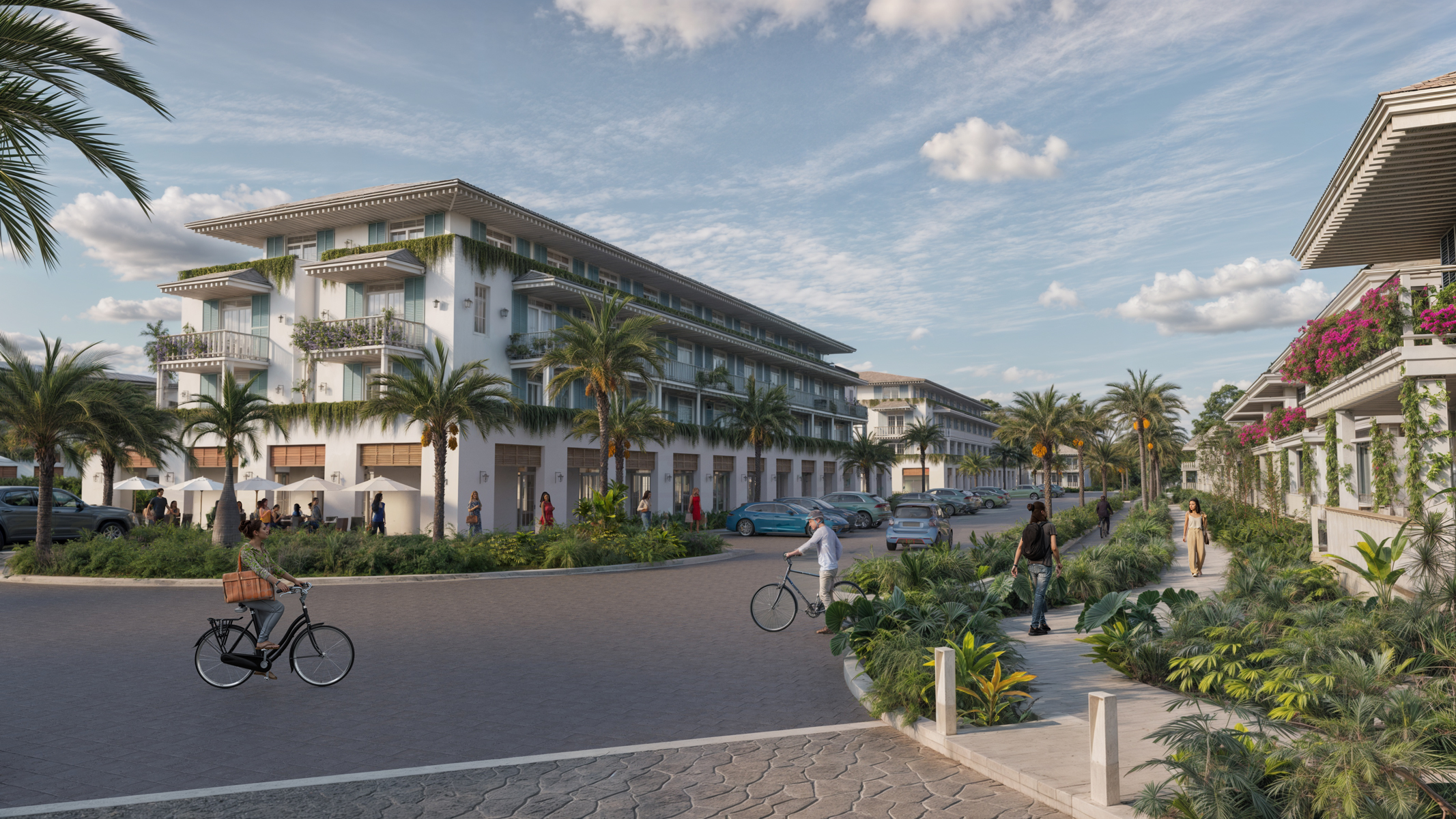
Throughout the master plan, pedestrian connectivity and outdoor living are fundamental principles. Tree-lined sidewalks, pocket gardens, bicycle lanes, and landscaped streets create a comfortable microclimate that encourages walking and social interaction. The public realm is designed not simply as circulation space, but as a sequence of outdoor rooms that extend the life of the community beyond the buildings themselves.
Architecturally, Marina Village combines innovative construction methods with traditional Southern coastal design principles. Deep roof overhangs, shaded arcades, balconies with vegetation, and carefully proportioned façades create buildings that respond to the climate while reinforcing the familiar architectural character of Georgetown. The result is a development that feels both contemporary and timeless—rooted in local identity while introducing a new vision for sustainable coastal living.
By balancing residential density, public space, and environmental preservation, Marina Village proposes a new model for growth in Georgetown: a walkable, low-rise community where architecture, landscape, and public life work together to create a vibrant and enduring place.